Thurs, Nov 12, 7:00pm at WRA Chapel. HHA to present screening of award-winning Frederick Douglass documentary.
Two Hudson Properties Receive HHA 2026 Preservation Awards
At its annual meeting of members on May 14, 2026, Hudson Heritage Association recognized two properties that have recently undergone extensive work to preserve and protect their historic character.
Located in the heart of the “Wooden Block” at 230 North Main Street in downtown Hudson, the Austin-Lake House recently underwent a massive restoration under the careful eyes of new owners Karyl and Russ Morrison, who purchased the property in August 2024.
Constructed in 1837, the Austin-Lake House is one of the five original existing homes on this block built between 1832 and 1843. It was constructed by Thomas Austin on property purchased from Owen Brown. Austin never lived in the house and in 1841, an English-born widow named Lucy Hurn Lake joined relatives in Hudson and moved in. Lucy lived here for 34 years until her death in 1877. She shared the Greek Revival house with her mother, who was also John Markillie’s mother, and her adopted daughter. During her time in the house, Lucy worked as a tailor and seamstress. The house remained a private residence until 1955, when it was converted to commercial use until its recent purchase.
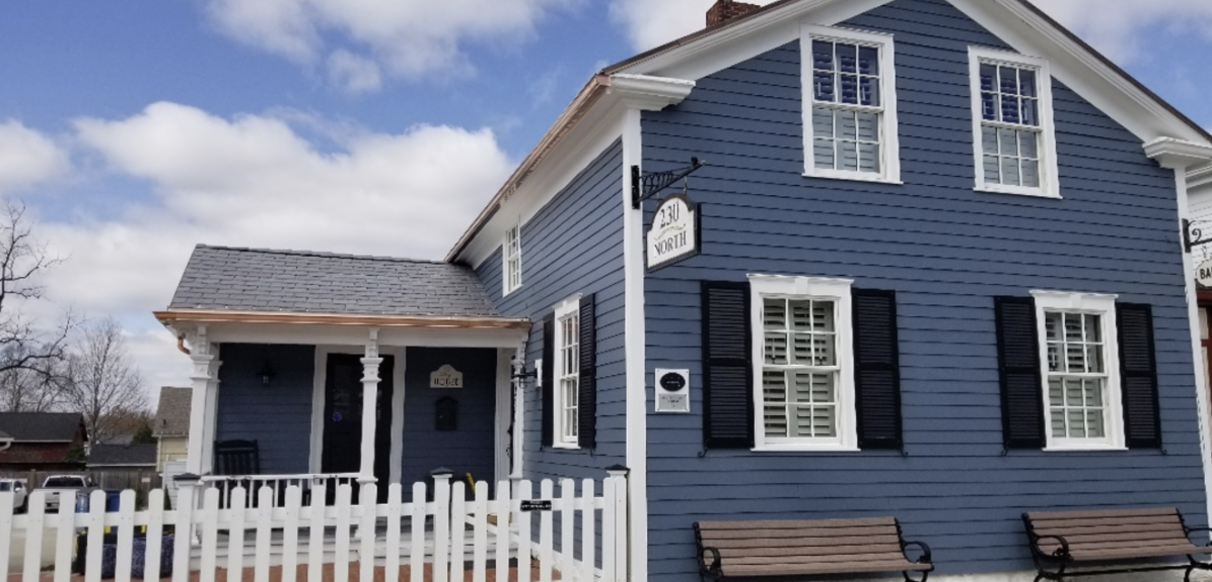
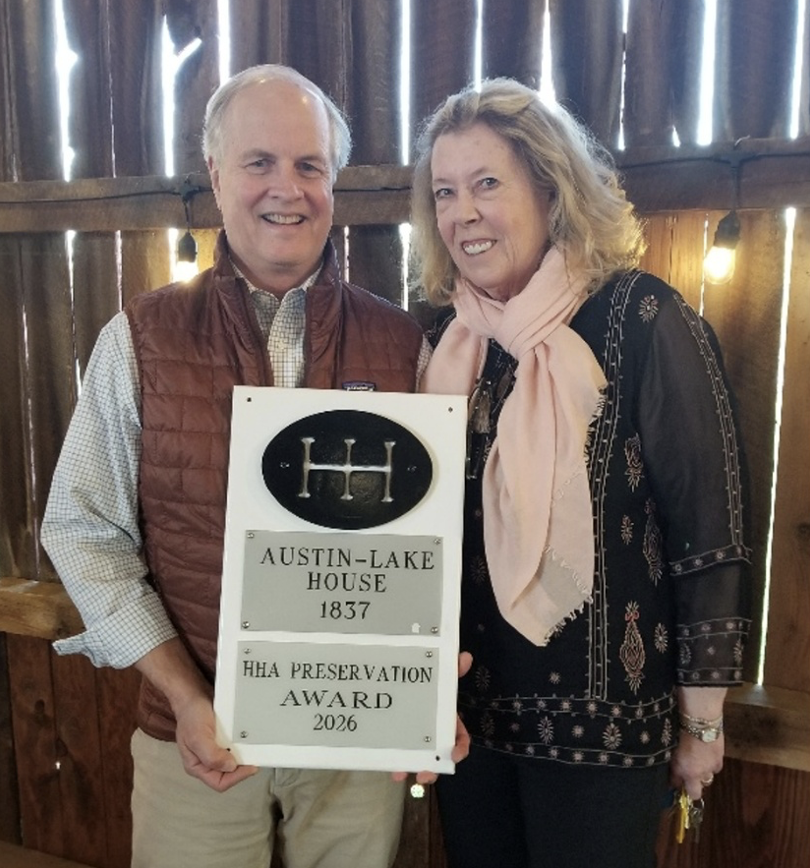
The Morrisons purchased the property “as is” and knew the building needed extensive restoration and preservation. That work began by addressing site drainage, foundation stabilization and roof repair/replacement, and soon encompassed replacing the home’s HVAC system, electrical system and plumbing. Intent on making authentic repairs, the Morrisons installed a slate-look roof, custom copper gutters and downspouts, laid reclaimed brick in the front courtyard, replicated fencing visible in a 100-year-old photograph of the property and installed sandstone steps leading from the front to the back of the site.
The couple took particular care to restore the home’s interior. On the main floor, hardwood floors were installed in the parlor, foyer and first-floor bedroom. Original wood beams were exposed and preserved. Missing solid wood doors were reinstalled. Reproduction hardware and period lighting were added. Original trim was repaired and restored and painted using a historic trim color discovered on-site. William Morris-design tile was installed in the hallway and breakfast nook. Wallpaper authentic to the 1800s was installed and the rooms were furnished and decorated with antiques and artwork appropriate to the home’s history.
On the ground floor, the Morrison’s created a mobility friendly suite with a full bath, with restored wood doors, trim and flooring throughout. An adjacent dining room was updated with solid wood flooring, period lighting and preserved original moldings and trim. A second floor “mini apartment” believed to have been Lucy Lake’s living quarters was created within the original floor plan and includes a bathroom updated with artist hand-painted wood flooring and reproduction period fixtures and lighting.
The Preservation Awards Committee noted, “The Lucy Lake house is a great example of a successful adaptive reuse project. The structure exists on its original site. … it retains much of its original appearance and architectural intent. And it has retained historic integrity in design, materials and relationship to its surroundings.”
Constructed in 1931, the log cabin located on Hudson’s southwest green was built as the meeting site for Boy Scout Troop 321 by the Hudson Rotary Club, led by Scoutmaster E.R. (Edgar Ray) Seese, who was also a Rotarian. When it was constructed during the Great Depression, the cabin was built using American chestnut logs – a species of wood that soon vanished from the American landscape following the introduction of a blight in the early 1900s. The logs were joined with traditional chinking – a substance vulnerable to failure when logs shrink and swell with weather changes.
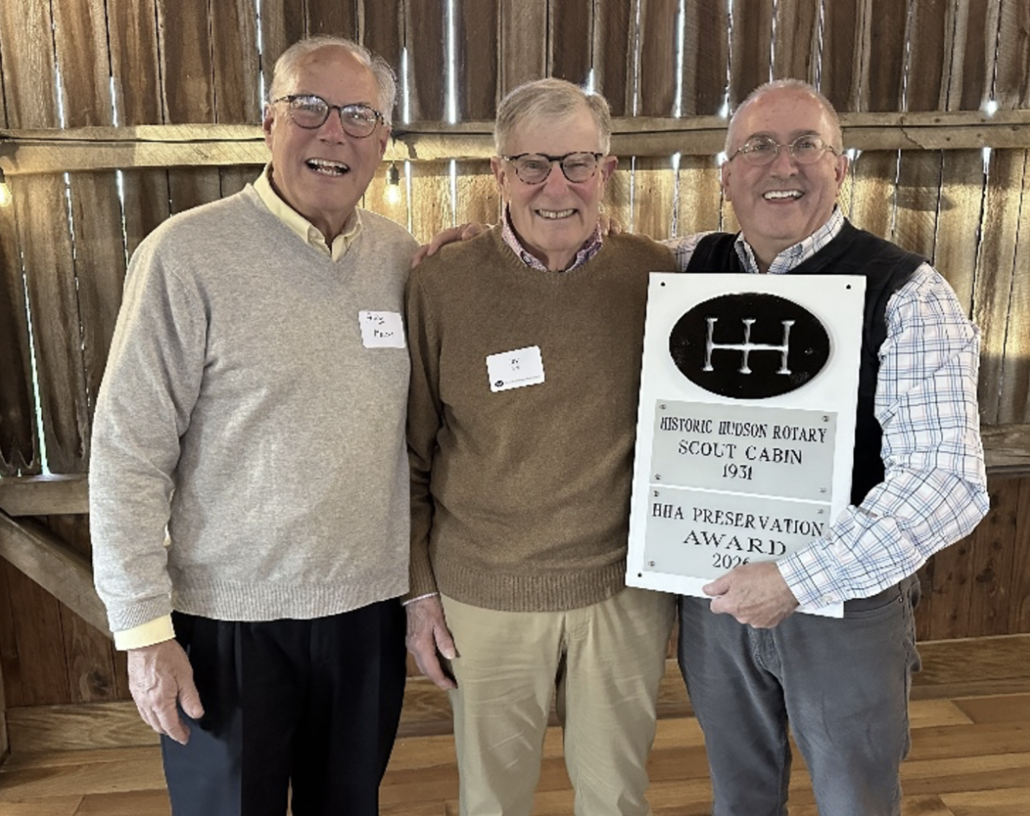

Although countless repairs were made to the building over the decades, by 2019, Hudson Rotary realized the cabin was in serious need of restoration. An ensuing campaign raised $170,000 – including a $75,000 grant from the state of Ohio, major funding from the Hudson Rotary Foundation and donations from community residents and scouting families.
Work began in 2023 and included replacing the failed chinking, repair or replacement of select chestnut logs, improving ADA accessibility and replacing portions of the roof, fascia boards and rafters. The restored cabin now includes updated historically compatible windows and doors, along with new gutters and downspouts, recently updated electrical and mechanical systems, and a new cap for the original, hand-built fieldstone chimney.
The Preservation Awards Committee noted, “The Scout cabin is a well-preserved log structure that exists in its original location. Its form and function have not changed since its creation, which adds to its historical importance. It is a great example of a successful and ongoing historic preservation effort.”